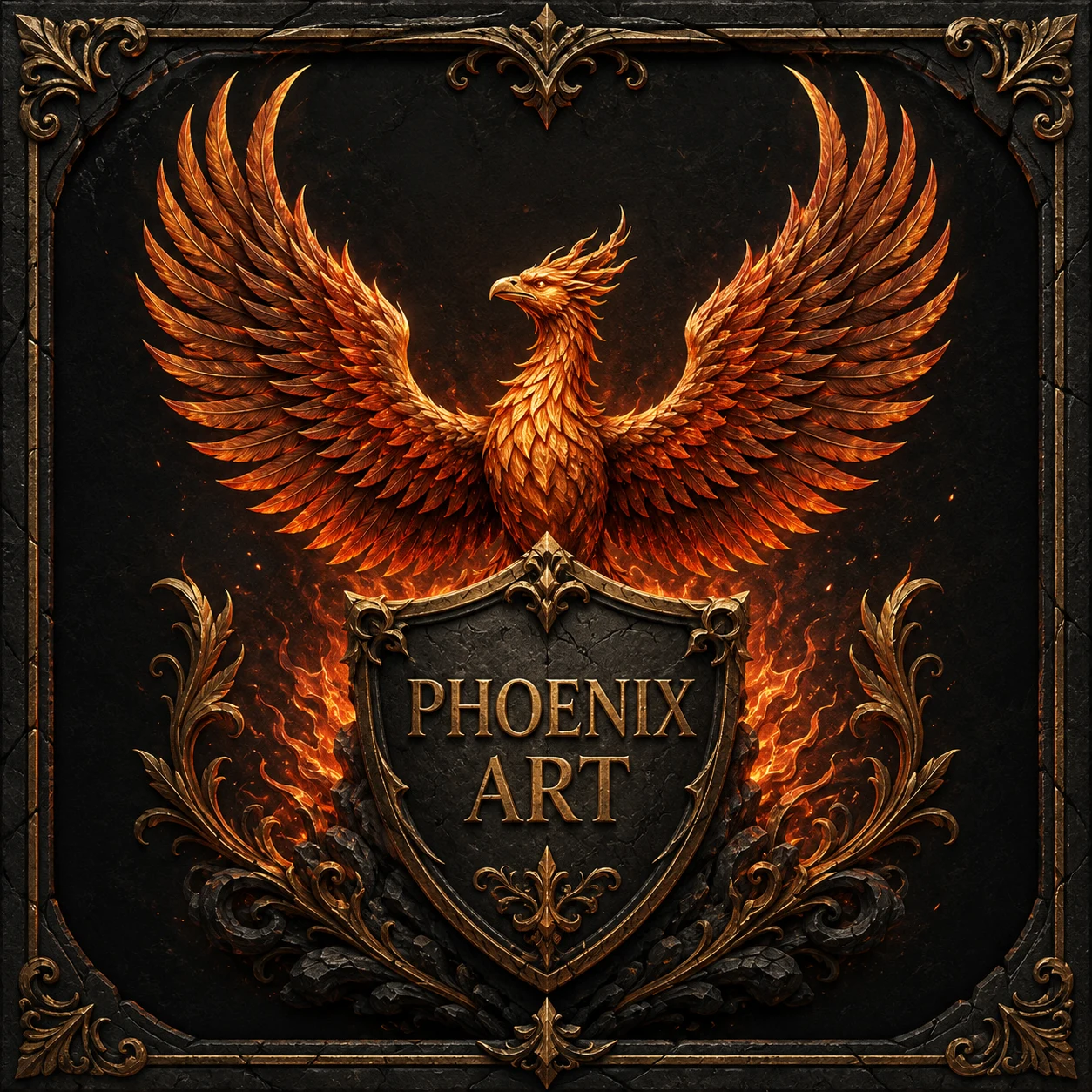
Color & Surface
Black and Gold in Decorative Illustration
Dark fields, restrained gold accents and warm transitional colors create hierarchy without turning every surface into spectacle.
Read the storyMythical imagery, emblems and visual design
Explore phoenix-inspired illustrations and discover how silhouette, ornament and contrast shape a memorable emblem.
Three editorial collections
Move from wing gesture to shield structure, then examine how texture and illumination finish the image.
Featured stories
Six original essays connect close looking with source-aware research.
Color & Surface
Dark fields, restrained gold accents and warm transitional colors create hierarchy without turning every surface into spectacle.
Read the story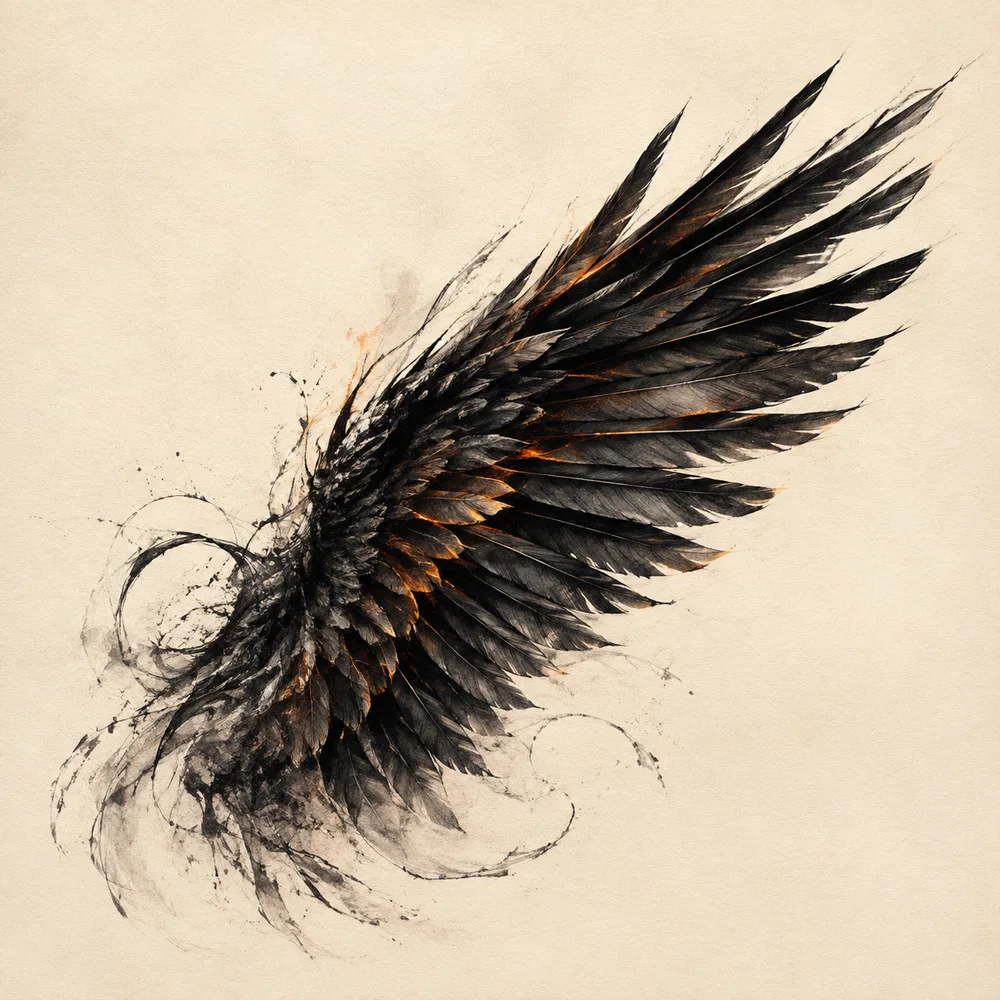
Phoenix & Wings
Wing angle, taper, overlap and negative space can make a centered emblem feel stable without becoming static.
Read the storyShields & Emblems
A shield can anchor title, figure and border when its silhouette and internal spacing are treated as structure rather than decoration.
Read the storyPhoenix & Wings
Silhouette, wing rhythm and controlled detail give an invented creature presence before effects are added.
Read the storyTexture & Light
Firelight becomes convincing when edge, scale, shadow and material cues agree about one imagined scene.
Read the story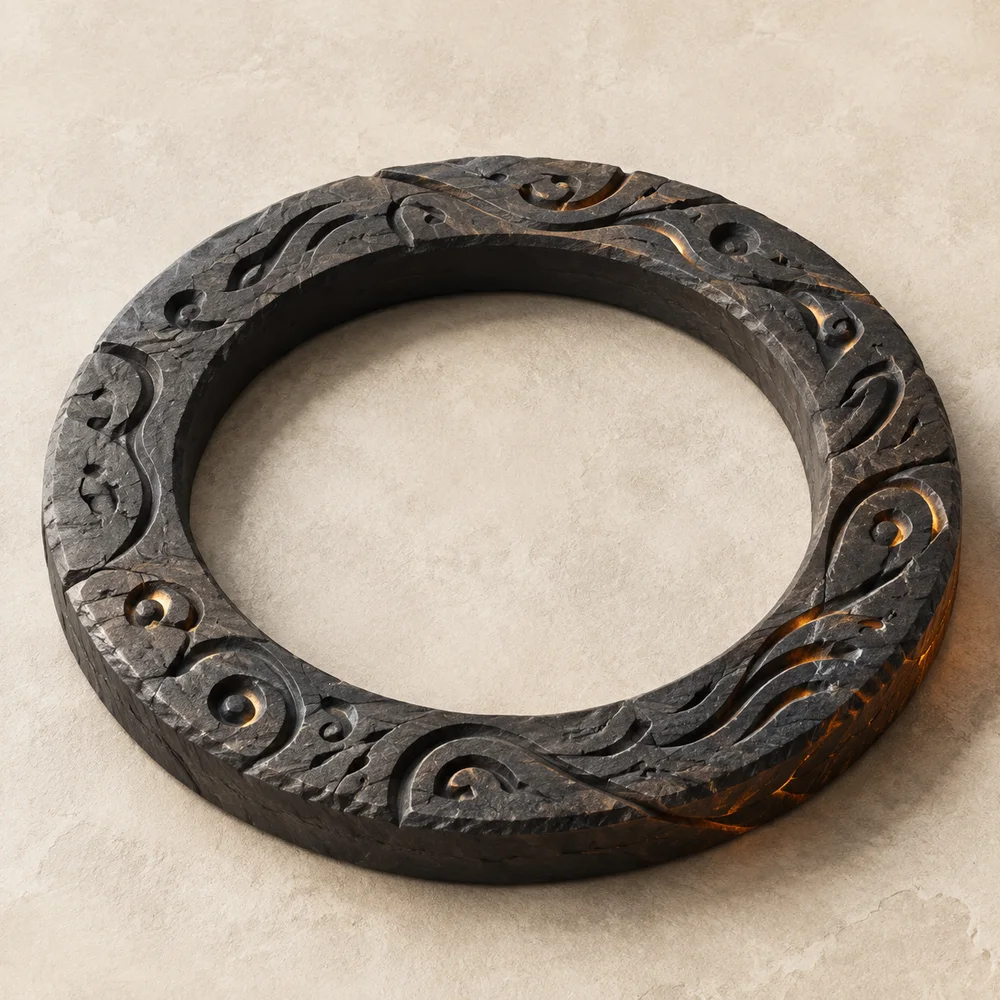
Research
A practical method for separating documented arms, modern visual borrowing and entirely fictional decoration.
Read the storyAnatomy of a winged emblem
The phoenix establishes identity and holds the highest concentration of detail.
Mirrored upward arcs lead the eye back to the bird and keep the composition balanced.
A broad lower field contains the title and anchors the bird above it.
Repeated fictional flourishes create rhythm without claiming historical meaning.
The title stays large, centered and separate from the feather texture.
Painted chips and recesses simulate aged stone and blackened metal.
Warm rim light separates copper feathers from the graphite background.
Visual approaches compared
Each approach solves a different visual problem. The comparison describes techniques without ranking them.
| Approach | Visual Features | Role of Texture | Typical Presentation |
|---|---|---|---|
| Flat Graphic Emblem | Reduced shapes, hard edges and a clearly separated figure | Texture is minimal so silhouette and lettering remain dominant | Small-format editorial mark |
| Relief-Inspired Illustration | Layered border, shield and raised-looking central motif | Digital shading imitates recesses and raised planes; it is not a carved object | Phoenix Art shield study |
| Detailed Fantasy Artwork | Atmospheric light, layered color and intricate feather groups | Painted stone, metal and ember effects create an imagined surface | Large editorial hero illustration |
From sketch to emblem
Research sets the boundaries. Silhouette establishes the gesture. Shield, border and lettering create hierarchy. Surface and light arrive only after the image reads at small size.
Read the research method ↗Research principles
We distinguish the ancient account, later interpretation, museum object and present-day design choice. We use museum catalogues, primary texts and controlled vocabulary where each is relevant.
The images in this edition are original generated studies. They are not reconstructions or photographs of artifacts.
Editorial policy ↗FAQ
The journal studies phoenix illustration, wing silhouettes, shield-based composition, decorative borders, simulated surfaces and dramatic light.
The featured emblems are contemporary editorial concept illustrations. Documented historical heraldry is discussed separately and linked to institutional sources.
None of the lead images is a photograph of a physical object. The captions identify them as generated digital illustrations or material studies.
Each article ends with the references used for its factual framework. The Sources & Image Credits page brings the full list together.
Not without permission from the verified rights holder. An image being visible here does not grant a reproduction or commercial-use licence.
The Contact page lists the reserved pre-publication address included in this transferable package. The receiving owner must replace and verify it before public launch.
About the publication
Emblem & Fire is an editorial draft about mythical imagery, decorative form and visual interpretation. It does not claim museum partnerships, archaeological authority or anonymous expert review.
How the journal worksSelected references
Ancient Greek literary account of the phoenix, including Herodotus’s explicit distance from the report.
Medieval bestiary treatment of the phoenix and its Christian resurrection reading.
Terminology for circular decorative panels in architectural settings.
Open-access collection record and visual description of a 1628 phoenix etching.